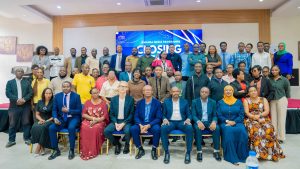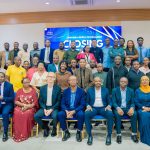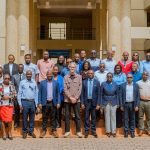

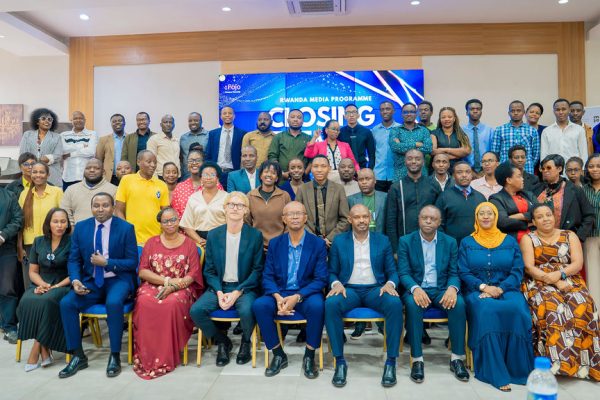
The Rwanda Media Programme (RMP) has supported more than 40 media houses, seven media organisations and four universities over five and a half years, strengthening professional journalism, newsroom management and practical journalism education.
Supported by the embassies of Sweden and Switzerland, the programme worked with journalists, media managers, educators and students to improve editorial practices, digital transformation, audience research and media sustainability.
Jonas Nyman, international programme manager at Fojo Media Institute, said the closing event marked the end of RMP, although the institute hoped to return with another initiative.
“Hopefully, within quite near future, we’ll return with a different project in Rwanda to continue strengthening the media sector and journalism in Rwanda, but under a different name,” Nyman said.
The programme focused on strengthening media institutions and professional networks, rather than training individuals alone. Its activities included audience research, investigative reporting, environmental journalism, digital publishing and the development of student-led magazines.
Nyman said one of the programme’s important lessons was the need for media houses to use audience evidence when making editorial and business decisions.
A final programme review also highlighted financial sustainability as a continuing challenge, with changing audience habits, growing digital platforms and pressure on advertising revenues affecting media organisations.
Speaking on behalf of the Swedish Embassy, Oscar Karnebäck, said the programme had sought to strengthen Rwanda’s media ecosystem by working with media houses, journalists, education institutions and the public broadcaster.
“Training individuals is important, but institutions matter even more, because institutions remain when people move on,” he said.
He added that quality journalism required more than professional skills.
“Strengthening journalism requires not only professional competence, but also financially sustainable institutions,” he said.
Journalism education and inclusion
RMP also supported journalism education through student magazines developed in partnership with universities, giving students practical experience in pitching stories, working with editors, meeting deadlines and producing content for audiences.
The programme strengthened the Rwanda Journalism Educators Network to encourage collaboration among lecturers and improve journalism training. It also supported environmental journalism through links between journalists, experts and institutions working on environmental issues.
Gender equality was another area of intervention. According to Nyman, gender policies had been introduced in close to 40 media houses, with women’s media organisations contributing to professional development and advocacy.
Louise Uwizeyimana, a representative of the women’s media associations’ collaboration, said its gender help desk had supported 24 victims of harassment over five years, offering psychological assistance and, in some cases, medical or legal support.
The associations also worked with media houses to develop gender and sexual harassment policies and improve reporting mechanisms.
However, Uwizeyimana noted that challenges remained, including newsrooms without designated channels for reporting misconduct. Poor working conditions and financial insecurity also continued to affect journalists.
Media houses report changes
Participating media organisations said the programme had helped improve their editorial and digital operations.
Emmanuel Ngabo of Radio Isangano said the station had strengthened editorial meetings, increased its daily news bulletins from three to five and expanded its network of local correspondents from five to nine.
“We also improved on our online presence,” Ngabo said, adding that the station had grown its Facebook audience to 34,000 followers and was expanding on YouTube.
He said training in video editing and local reporting had helped the community radio station produce digital content and include stories from areas its journalists could not easily reach.
At Royal FM, audience research led to a change in the station’s language balance. Aissa Cyiza, representing the station, said it had previously broadcast entirely in English before research showed the need to include more Kinyarwanda content.
“The survey showed us that we needed to include Kinyarwanda because Rwandans love telling stories in their own language,” Cyiza said.
“After the survey, we ended up by having 60% English, 40% in Rwanda,” she added.
The station also received support in developing social media strategies and exploring ways to generate revenue from digital platforms.
“We can no longer depend on traditional broadcasting,” Cyiza said. “We have to embrace digital opportunities, engage our audiences wherever they are, and build sustainable platforms for the future.”
Beyond strengthening established media houses, the programme also invested in the next generation of journalists by supporting journalism students with practical training and professional mentorship.
Rwema Rogers, a journalism student at Institut Catholique de Kabgayi (ICK), said the programme helped students turn classroom theory into practical skills through training in mobile journalism, documentary production and video reporting.
“Mentorship helped us move beyond theory. We produce stories, and experienced professionals review our work and show us how to improve,” Rwema said.
He cited student initiatives such as the Gender Lens Newsletter and Green Voice Rwanda, which focus on gender and environmental reporting, respectively.
As RMP closed, it handed over desktop computers to participating universities to support the continued production of student magazines, leaving a practical resource for journalism education beyond the programme’s five-and-a-half-year run.