

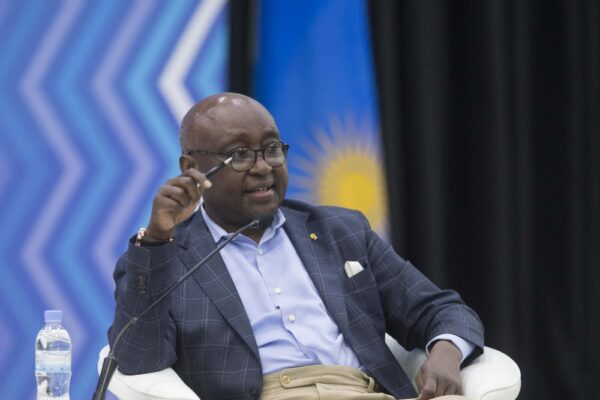

Donald Kaberuka’s journey from a Rwandan refugee forced into exile to one of Africa’s most influential economic figures is a story of resilience, institution-building and a pragmatic approach to development.
Born on October 5, 1951, in Byumba, Rwanda, Kaberuka grew up during a difficult period in the country’s history. The persecution of 1959 forced many Rwandans, including his family, into exile. Decades later, he would become one of the key figures involved in rebuilding Rwanda’s economy after the 1994 Genocide against the Tutsi and would go on to lead one of Africa’s most important financial institutions.
Kaberuka studied economics and development, beginning his higher education at the University of Dar es Salaam. He later obtained a Master of Philosophy in Development Studies from the University of East Anglia in 1979 before earning a PhD in Economics from the University of Glasgow.
His economic thinking was shaped by his experiences studying in the United Kingdom during the economic turmoil of the 1970s. In an interview with Jeune Afrique, Kaberuka recalled how Britain’s economic crisis, marked by high inflation and a request for support from the International Monetary Fund in 1976, influenced his views.
“The economic and industrial crisis had a profound impact on me,” Kaberuka recalled. “Imagine the United Kingdom with 25 percent inflation having to seek assistance from the International Monetary Fund in 1976. It taught me to be skeptical of theories. Since then, my approach has been simple: What works?“