

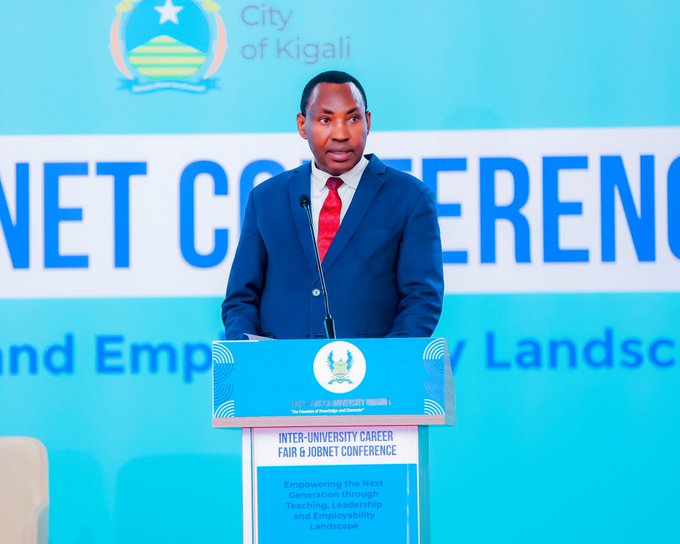
Universities, employers and policymakers have been urged to strengthen collaboration to address graduate unemployment and skills mismatches as hundreds of students gathered for the fourth Inter-University Career Fair and JobNet Conference in Kigali.
The event, hosted by East African University Rwanda (EAUR) in partnership with the City of Kigali and JobNet, brought together students from universities across the country, government institutions, development partners and private sector employers under the theme: “Bridging Education Gaps, Employability and Innovation for Sustainable Development.”
The conference marked the first time the annual career fair was elevated to a national platform, reflecting growing concern over youth employability and the need to better connect academic learning with labour market demands.
Closing the gap between classrooms and workplaces
Opening the conference, EAUR Vice Chancellor Prof. Callixte Kabera said higher education institutions must continuously adapt to changing workforce needs while strengthening partnerships with industry.
He noted that many graduates continue to face challenges entering the job market due to limited workplace experience, skills mismatches and gaps between classroom instruction and employer expectations.
“Employability is not only about obtaining a degree. It is also about developing adaptability, communication skills, creativity, integrity, teamwork and a commitment to lifelong learning,” he said.
The Vice Chancellor called for collective action among universities, employers and policymakers, arguing that sustainable solutions require all stakeholders to work together.
Education must adapt to a changing world
Representing the Higher Education Council (HEC), Dr. Martial Igiraneza stressed that technological advancement, digital transformation and globalisation are rapidly reshaping the world of work.
He said universities can no longer focus solely on academic knowledge but must equip graduates with practical competencies that match evolving industry needs.
“The world of work is changing rapidly. Higher education institutions must continuously adapt to ensure that graduates possess not only academic knowledge but also practical skills, creativity, innovation, critical thinking, communication abilities and entrepreneurial mindsets,” he said.
Dr. Igiraneza described career fairs as essential platforms for connecting students with employers, internships and professional networks while helping bridge the gap between education and employment.
AI, innovation and entrepreneurship take centre stage
A keynote presentation by Rwanda TVET Board Director General Paul Mukunzi challenged students to rethink traditional career pathways and prepare for a future shaped by technology and innovation.
“The future does not reward the most qualified; it rewards the most adaptable,” he told participants.
Mukunzi encouraged students to embrace lifelong learning, acquire digital skills and explore entrepreneurship alongside traditional employment opportunities.
He highlighted artificial intelligence, renewable energy, cybersecurity, agricultural innovation and the creative economy as sectors expected to drive future job creation in Rwanda.
Experts discuss youth employment challenges
A panel discussion featuring representatives from the Ministry of Public Service and Labour, UNICEF Rwanda, Tele 10, EAUR and career development specialists examined the structural causes of youth unemployment and underemployment.
Panellists emphasised the importance of practical workplace skills, professional behaviour, mentorship and industry exposure.
They also highlighted the growing role of artificial intelligence and digital technologies in creating new opportunities for young people.
Joana Nyagahene, an entrepreneur and digital transformation specialist, urged students to focus on creating value rather than simply seeking jobs.
“Soft skills are just as important as technical skills. Young people should embrace technology, innovation and problem-solving,” she said.
Students gain direct access to employers
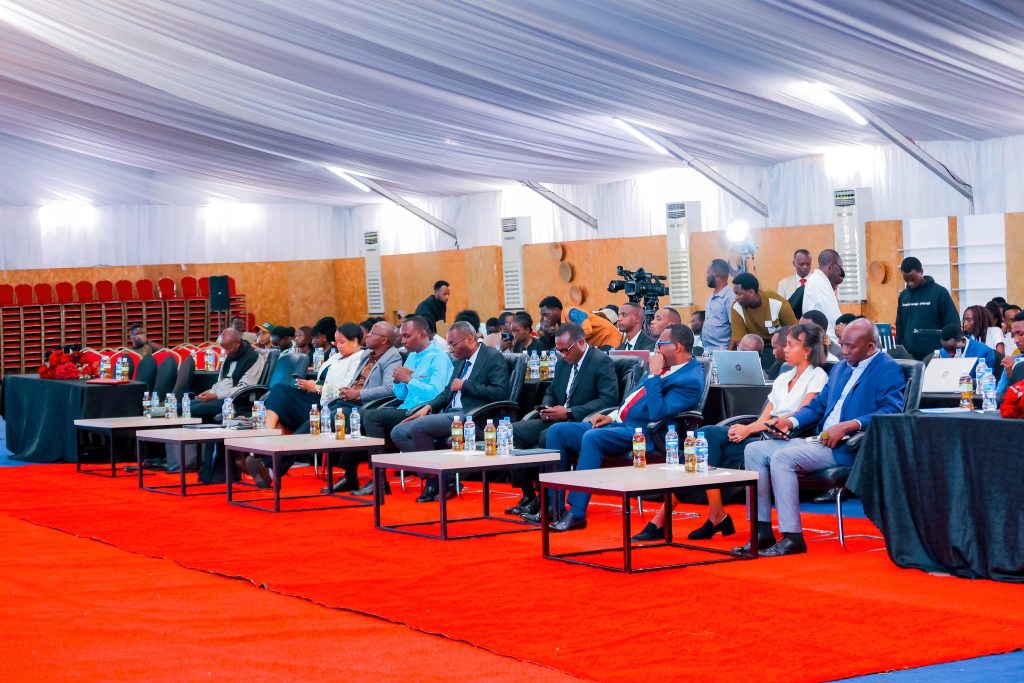
For many students, the conference provided a rare opportunity to interact directly with employers, recruiters and industry leaders.
Henriette Muhawenimana, a third-year Mass Communication student at EAUR, said the event changed her understanding of what it takes to succeed after graduation.
“I always thought finishing my studies was enough. But talking to employers today made me realise that what you do outside the classroom matters just as much, your networks, your attitude and your ability to communicate,” she said.
The conference also featured innovation exhibitions, networking sessions and talent showcases, where students presented projects ranging from AI-powered recruitment platforms to digital business solutions.
Call for stronger partnerships
As the conference concluded, participants called for deeper and more institutionalised collaboration between universities, employers and policymakers.
Among the key recommendations were expanding internship opportunities, integrating practical workplace skills into academic programmes, promoting AI and digital literacy, strengthening mentorship initiatives and supporting student entrepreneurship.
Organisers said the discussions reflected a shared commitment to ensuring that Rwanda’s graduates are better prepared for the opportunities and challenges of a rapidly changing labour market.
For students preparing to enter the workforce, the message from the conference was clear: academic qualifications remain important, but adaptability, practical skills and continuous learning will increasingly determine success in the careers of the future.