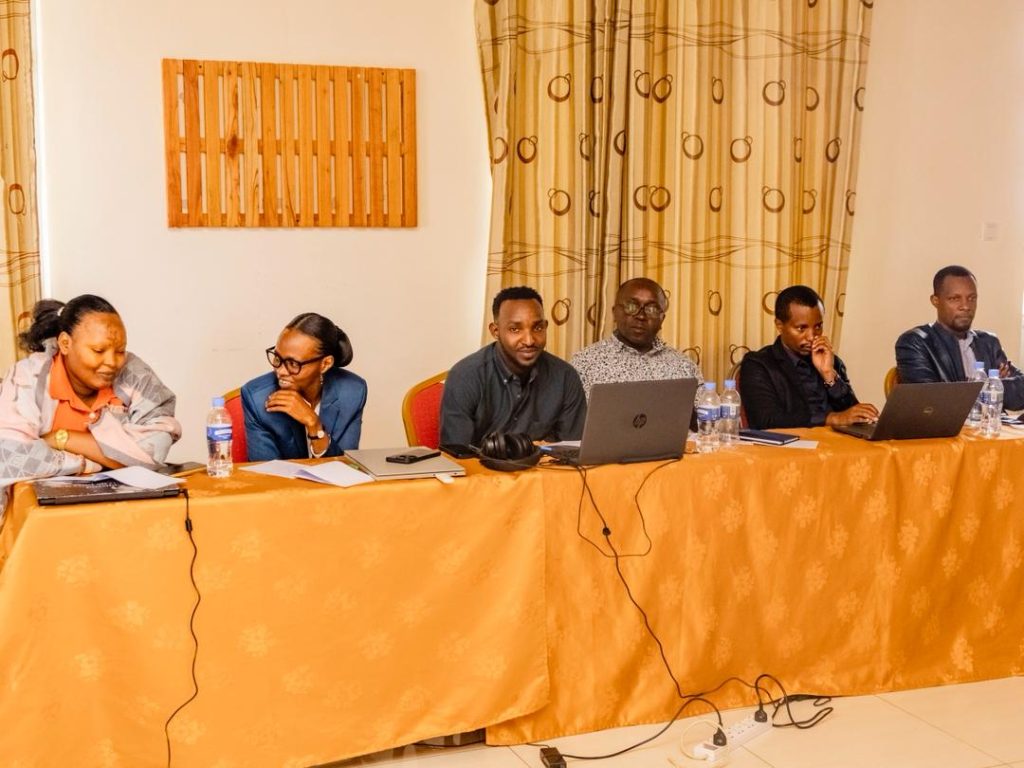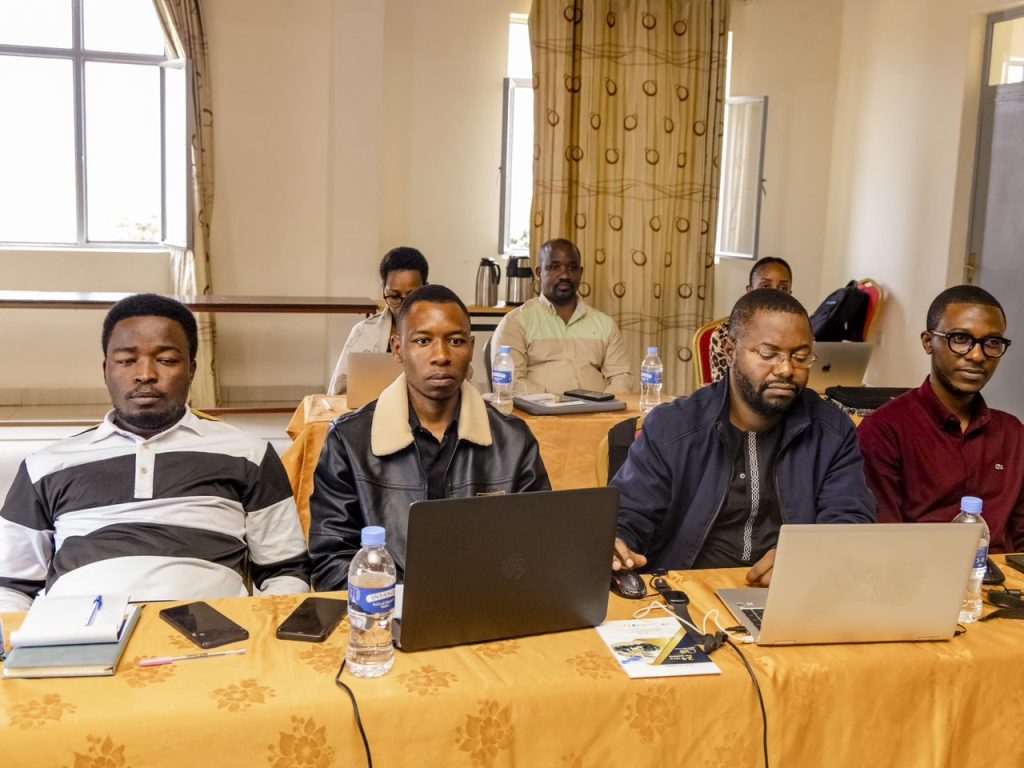
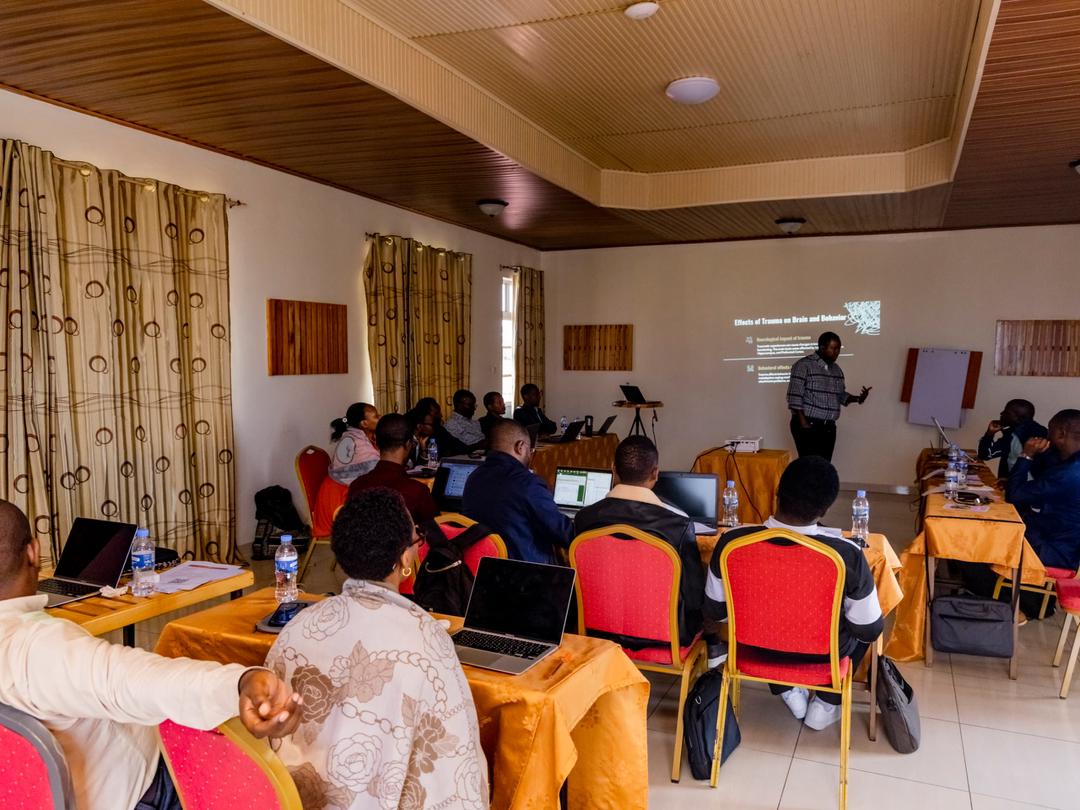
Journalism educators from four Rwandan universities are meeting in Muhanga from January 19 to 23, 2026, for a five-day training aimed at strengthening trauma and stress management within journalism education.
The training brings together 12 lecturers from East African University Rwanda (EAUR), University of Rwanda (UR), Institut Catholique de Kabgayi (ICK) and Mount Kigali University (MKU). It is supported by UNESCO in partnership with the FOJO Media Institute under the Agile Project, which focuses on lecturer preparedness, professional well-being, and ethical journalism practice.
The program is designed to equip lecturers with practical tools to prepare future journalists for high-pressure reporting environments, including coverage of conflict, disasters, and human suffering. Participants are trained in trauma- and stress-sensitive teaching approaches that emphasize journalists’ mental health while promoting respect for the dignity of affected communities.
Marie Anne Dushimimana, Gender Mainstreaming Coordinator at the Rwanda Media Program implemented by FOJO Media Institute, said the initiative responds directly to the realities journalists face in Rwanda.
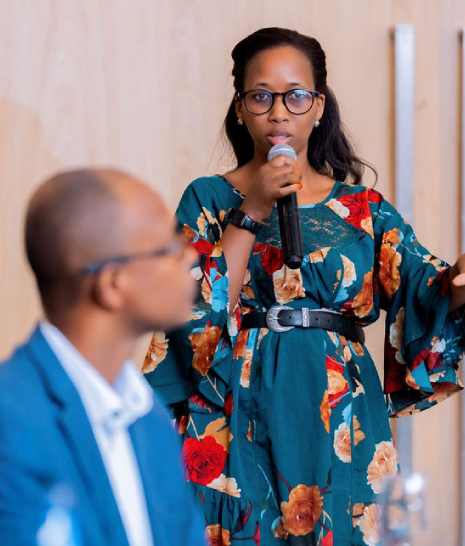
Gender main streaming coordinator at Rwanda Media Program implemented by FOJO media institute.
“Journalists are exposed to many stressful events. They cover road accidents, genocide commemoration periods, and work under constant deadlines,” Dushimimana said. “Yet there is limited preparation for stress and trauma management in journalism curricula. This training helps educators prepare students for what they will face in the field.”
She added that the program also seeks to bridge the gap between theory and practice in journalism education.
“Journalism is a practical profession. For a long time, schools focused more on theory than practice. Through this initiative, we bring professionals, mentors, and hands-on training to strengthen practical learning,” Dushimimana said.
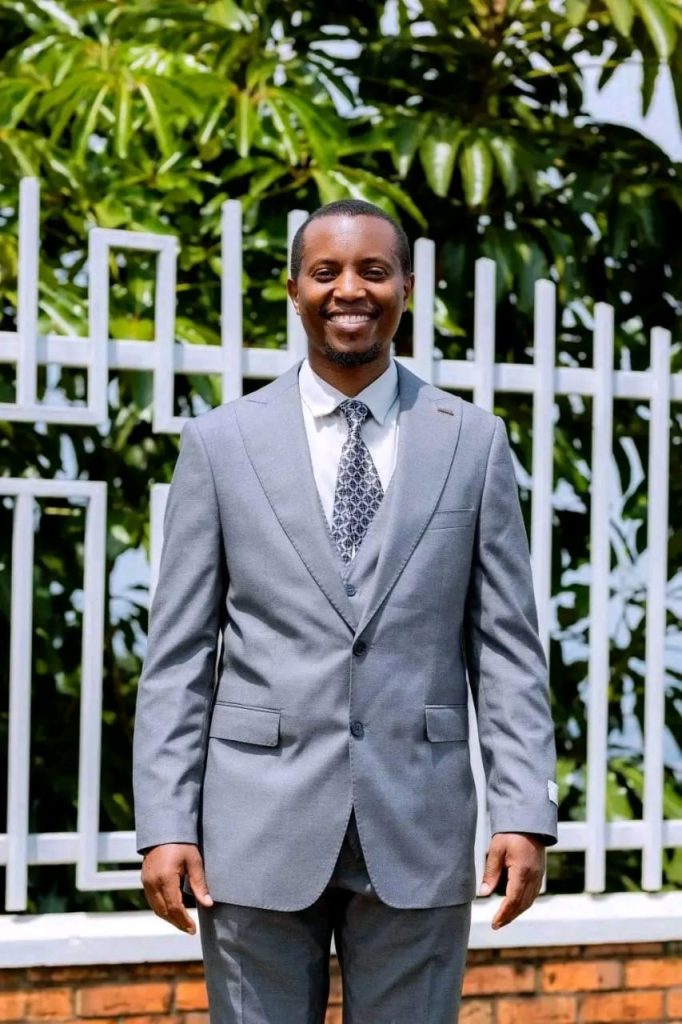
Festus Irungu, Head of the Department of Mass Media and Communication at Mount Kigali University, is attending the training as a participant. He said the program enhances how lecturers prepare students for real newsroom conditions.
“This training of educators helps us integrate reporting skills with trauma awareness. It prepares students to work ethically and safely, even when covering difficult and emotionally demanding stories,” Irungu said.
According to Dushimimana, trauma-informed journalism benefits both journalists and the public.
“When journalists are mentally stable, they work better. They are also better equipped to engage with people who have experienced trauma without causing further harm,” she said.
The training also strengthens collaboration among journalism educators and promotes shared standards in journalism training across the country.
Organizers say the five-day program is expected to enhance teaching capacity, improve lecturer preparedness, and contribute to a safer and more ethical journalism culture in Rwanda.