
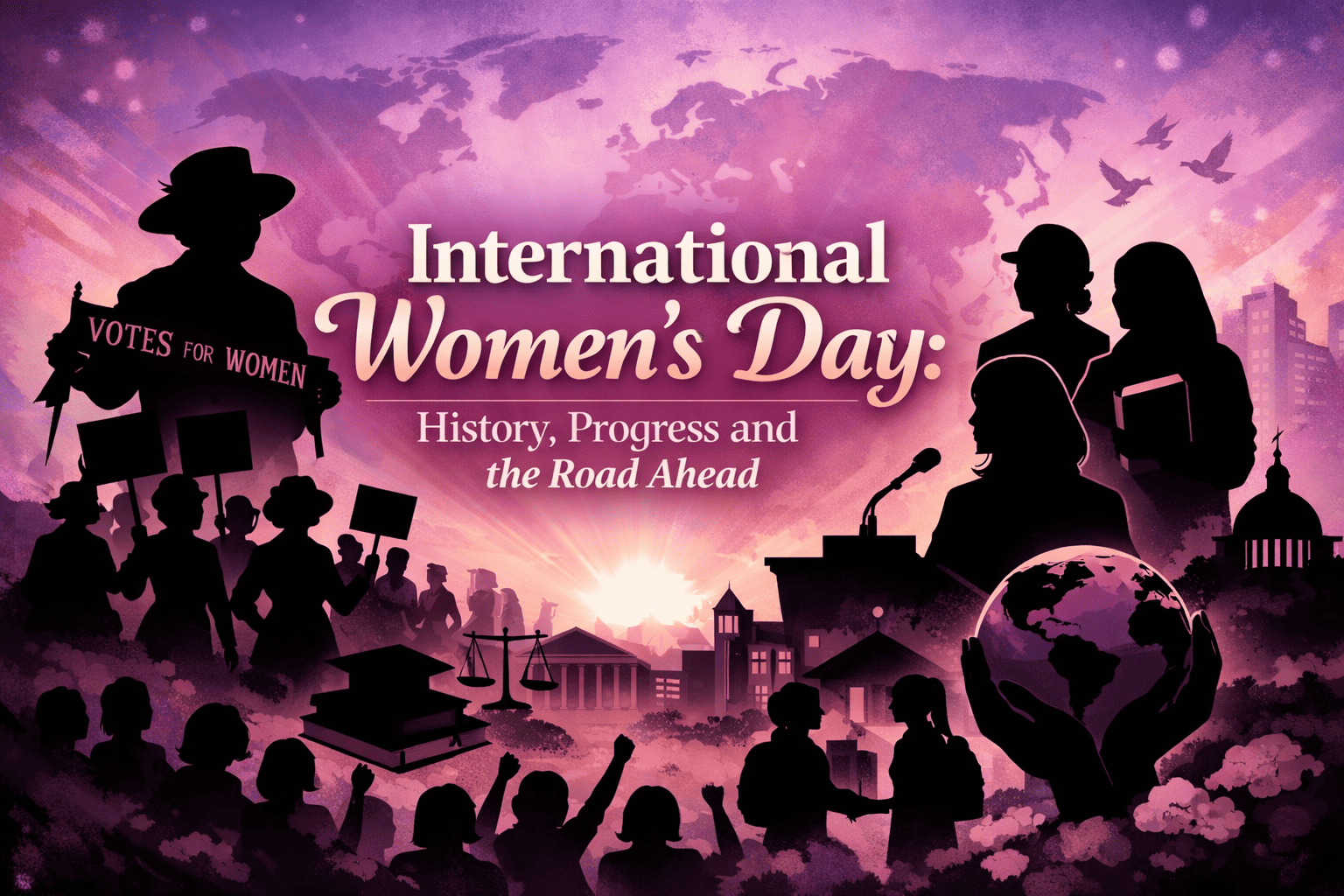
Every year on March 8, the world marks International Women’s Day, a global occasion dedicated to recognizing the social, economic, cultural and political achievements of women while also highlighting the challenges that remain in the pursuit of gender equality.
The roots of International Women’s Day date back to the early twentieth century, a period when women across many countries were increasingly advocating for improved working conditions, voting rights and equal opportunities in society.
In 1910, German activist Clara Zetkin proposed the idea of establishing an international day dedicated to women during the International Socialist Women’s Conference held in Copenhagen. Her proposal aimed to unite women across the world in the struggle for equal rights and greater representation. The idea quickly gained support, and the first International Women’s Day was observed in 1911 in several European countries.
Over the following decades, the observance gradually developed into a global movement. In 1975, the United Nations officially began marking International Women’s Day, recognizing gender equality as an important issue in global development and human rights.
Over the years, International Women’s Day has contributed to greater awareness of gender equality and has helped bring global attention to the challenges faced by women. In many parts of the world, women have gained broader access to education, employment opportunities, leadership roles and political participation.
International organizations such as UN Women have worked alongside governments and civil society groups to promote policies that support women’s empowerment and protect their rights. These efforts have helped encourage reforms aimed at addressing discrimination and expanding opportunities for women and girls.
In countries such as Rwanda, women’s representation in decision-making institutions has become among the highest in the world. Rwanda is often cited internationally as an example of how women’s participation in governance can contribute to inclusive policymaking and national development.
International Women’s Day has also played an important role in raising awareness about issues including gender-based violence, workplace inequality, access to education and the need for equal economic opportunities.
Beyond policy discussions and advocacy, International Women’s Day has helped encourage broader social and cultural change. The day has become an opportunity for governments, organizations and communities to recognize women’s contributions to society and to reflect on the progress that has been achieved.
It also encourages institutions to strengthen efforts toward gender equality in workplaces, schools and leadership structures. In addition, the day has created space for women to share their experiences, highlight challenges and advocate for continued progress. Through such dialogue, International Women’s Day continues to inspire new generations to pursue equality and justice.
Despite the progress achieved in recent decades, many experts note that significant challenges remain. In many parts of the world, women continue to face barriers such as unequal pay, limited access to leadership opportunities and persistent forms of gender-based violence.
Looking ahead, expectations surrounding International Women’s Day include stronger policies to protect women’s rights, greater access to education and economic opportunities, and increased participation of women in leadership and decision-making processes. There is also growing emphasis on ensuring that girls grow up in environments where they can fully develop their potential and contribute to society.
International Women’s Day serves both as a celebration of achievements and as a reminder that the pursuit of gender equality requires continued commitment. While progress has been made in many areas, the day calls on governments, institutions and individuals to keep working toward a future where opportunities and rights are equal for everyone.
As the world marks another International Women’s Day, the message remains clear: meaningful progress has been achieved, but the journey toward full equality continues.