

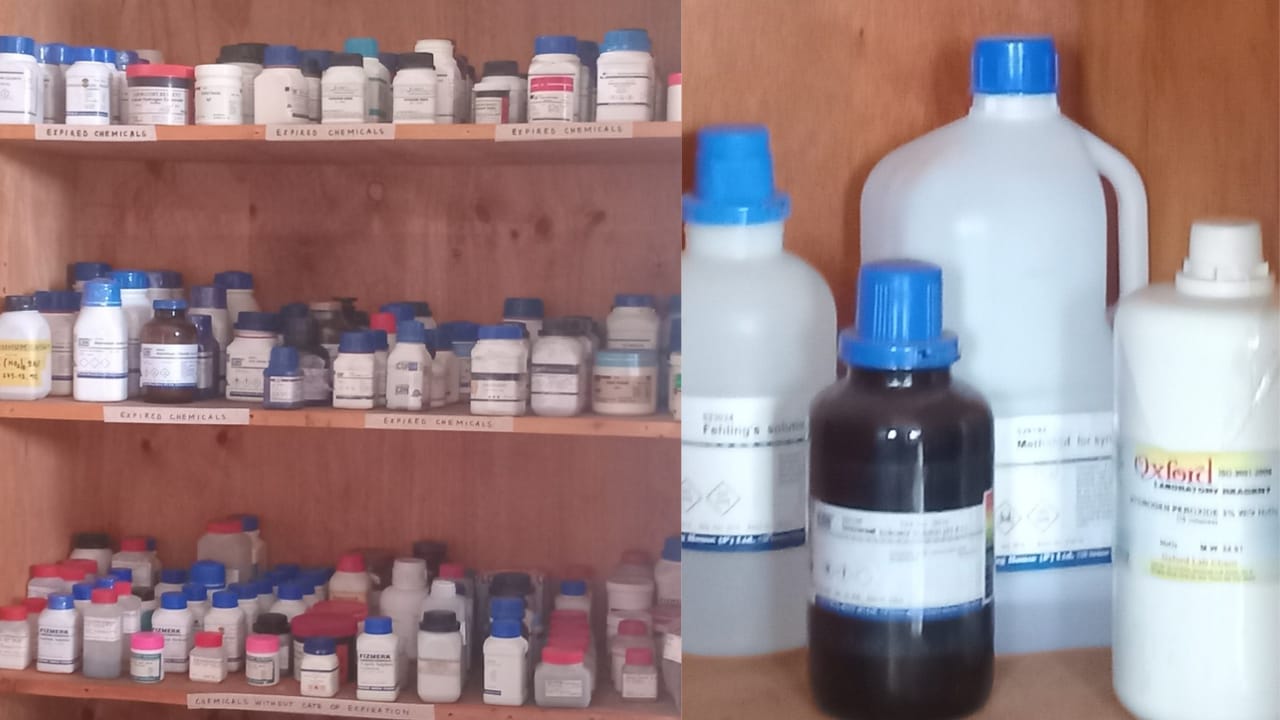
Behind the quiet doors of school laboratories, where students explore the fundamentals of science, another lesson is quietly unfolding one about environmental responsibility and the hidden costs of learning. Across Rwanda, expired laboratory chemicals are accumulating in schools, raising concerns about how institutions manage substances that outlive their usefulness but not their potential danger.
Expired Chemicals in School Laboratories
At College Saint André, science laboratories rely on a wide range of chemicals to support student practical lessons. Over time, some of these substances expire, transforming from valuable teaching tools into potential environmental hazards.

According to Marie Alice Niyonshuti, the school’s laboratory manager, managing such chemicals requires constant vigilance.
“Expired chemicals cannot simply be thrown away,” she explained. “Some can still be treated safely within the school, but others require specialized handling.”
For example, sulfuric acid can sometimes be managed on site through controlled dilution until it loses its harmful properties. However, powdered chemicals present a greater challenge because they cannot easily be treated in school laboratories.
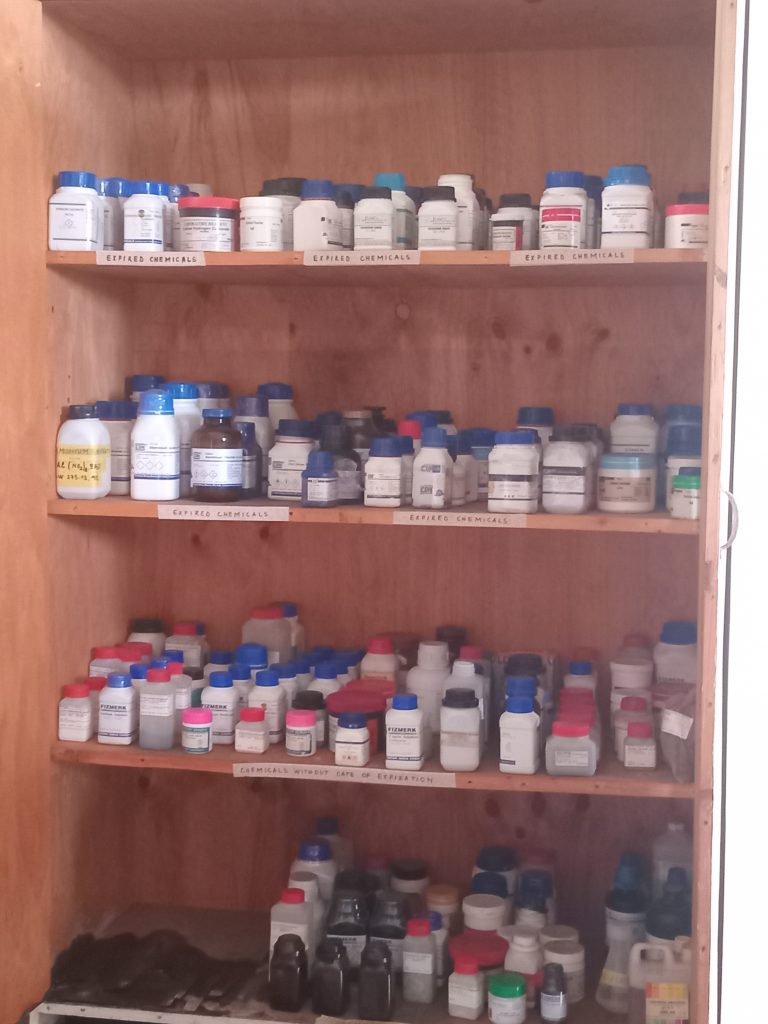
Currently, the school stores 51.5 kilograms of expired powdered chemicals and 57.5 litres of expired liquid chemicals, all kept under controlled conditions but still posing potential long-term risks if left unattended.
Training and Support from REMA
To help address these risks, the Rwanda Environment Management Authority (REMA) provides training to laboratory staff on the safe storage and handling of expired chemicals. However, Niyonshuti says that while the training is helpful, it is not enough without regular waste collection.
“The training usually lasts one or two days,” she said. “But storage, even when done properly, is not a permanent solution. If chemicals remain stored for too long, they can still affect the environment, including air quality, if containers deteriorate or chemicals degrade.”
Procurement Practices Worsen the Problem
Environmental experts argue that the issue often begins much earlier-during the procurement process. Dr. Abbias Maniragaba, an environmental specialist, says schools sometimes unintentionally create the problem themselves.

“Schools often buy chemicals in quantities far beyond what they actually need,” he explained. “Suppliers sometimes sell chemicals that are close to expiration at discounted prices. Schools see this as saving money, but the chemicals expire before they are fully used.”
Dr. Maniragaba recommends adopting green procurement practices, which encourage institutions to purchase only the quantities they can safely use and store.
He also stresses that disposal should be considered before chemicals even enter school laboratories.
“Schools should negotiate disposal responsibilities with suppliers during the purchasing process,” he said. “If chemicals expire before being used, they should be returned to suppliers who have the technical capacity to dispose of them safely.”
Improper disposal practices such as burying chemicals or pouring them into the soil—can contaminate underground water sources and cause long-lasting environmental damage.
National Response and Clean-Up Efforts
At the national level, authorities acknowledge the scale of the problem but say progress is being made. Between July and October 2025, REMA removed more than 5.5 tonnes of hazardous chemicals from 109 institutions, including schools, universities, and hospitals.
REMA Director General Juliet Kabera explained that removing such waste requires careful identification and classification before safe transportation and disposal.

To strengthen the system further, REMA is constructing a temporary hazardous waste storage facility, expected to be completed by early 2026, where toxic materials can be safely held before final treatment and disposal.

“Some schools and hospitals are trying to avoid taking responsibility for managing their expired chemicals,” says Cyprien Ngendahimana, Communication specialist at Rwanda Environment Management Authority.
For years, REMA has been at the forefront of efforts to address this issue through a dedicated chemical waste management project. However, that intervention was never meant to be permanent.
“The project we had for collecting expired chemicals was designed to run for five years, and it is now nearing its end. That activity was only one component of a broader initiative,” Ngendahimana explains.
He emphasizes that the initiative was intended to set an example not to replace institutional responsibility.
“Collecting chemicals from schools was meant to demonstrate that proper management is possible not to take over the responsibilities of those institutions.”
According to REMA, the responsibility lies squarely with the institutions that procure and use these chemicals.
“In reality, it is the responsibility of each institution whether a school or a hospital to dispose of chemicals once they expire or are no longer needed,” he says.
To support safe disposal, existing infrastructure has been put in place. Some hazardous chemicals can be destroyed through controlled incineration.
“There is a company, Depot Kalisimbi, which operates an incinerator capable of destroying certain types of chemicals. However, not all chemicals can be incinerated,” Ngendahimana notes.
Certain substances, such as mercury, require special handling due to their high toxicity.
“For example, mercury cannot be burned because it poses serious environmental and health risks,” he adds.
For such materials, a longer-term solution is underway.
“To address chemicals that cannot be incinerated, REMA is constructing a storage facility in Nduba. This will provide a long-term solution for safely storing hazardous chemicals.”
Despite these efforts, misconceptions persist among some institutions about REMA’s role.
“Some people believe REMA will continue moving from place to place collecting expired chemicals, but that is not the case,” Ngendahimana says.
Instead, he stresses a shift in mindset one that includes financial planning for safe disposal.
“For chemicals that can be incinerated, the institution that procured them must cover the cost of disposal. This is part of their obligation.”
“This is the mindset we are trying to change anyone who procures chemicals must also plan and budget for their safe disposal.”
As Rwanda continues to strengthen its environmental protection systems, authorities warn that ignoring expired chemicals is not just negligence, it is a serious risk.
“Keeping expired chemicals is extremely dangerous and can be life-threatening at any time,” Ngendahimana cautions.
In addition, the government has allocated Rwf 3.9 billion in the 2025–2026 fiscal year to support the treatment, storage, and safe disposal of hazardous waste across the country.
Students and Environmental Awareness
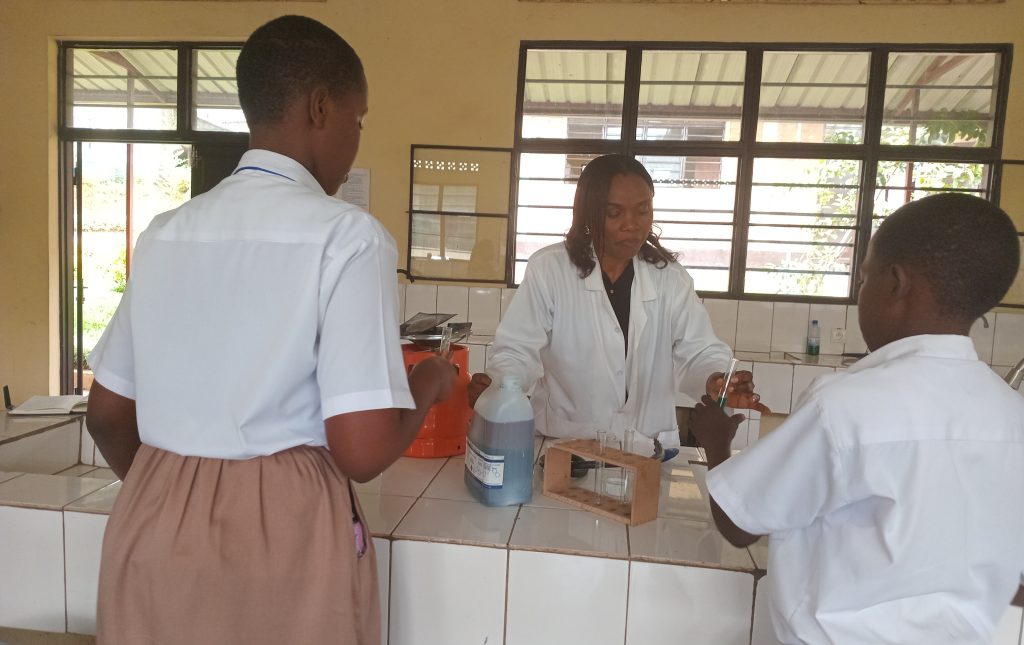
Students are also becoming increasingly aware of the environmental risks linked to laboratory waste.
Muneza Bonheur Pacifique, a student at College Saint André, believes poor waste management could endanger both people and the environment.
“We learn that broken laboratory equipment can injure people or animals if it is not disposed of properly,” he said. “Chemicals can also pollute the air. That is why we would like authorities to collect this waste regularly.”
Another student, Mugisha Tina Henriette, worries about long-term environmental consequences that may not be immediately visible.
“If expired chemicals are dumped into the soil, plants may fail to grow,” she said. “Sunlight can cause harmful evaporation, and rainwater can carry the chemicals into rivers used by communities.”
Students have suggested stricter access control to chemical storage areas and improved waste management systems in schools with limited resources.
Legal Framework for Hazardous Waste Management
The management of hazardous chemical waste in Rwanda is guided by Law Nº 48/2018 of 13 August 2018 on Environment. Under Article 19, hazardous and toxic waste generated by institutions with laboratories—including schools and research centers must be collected, treated, and disposed of in a way that does not harm human health or degrade the environment.
The law requires institutions to ensure safe storage, transportation, and disposal of chemicals such as acids, bases, and other toxic substances, protecting students, staff, and surrounding communities from potential contamination.
A Problem Decades in the Making
Investigations conducted by REMA indicate that some chemicals stored in school laboratories have remained there for 20 to 50 years, often due to a lack of disposal systems.
Environmental assessments have revealed cases where chemicals were improperly disposed of by dumping them into open pits or septic tanks, practices that can contaminate soil and underground water sources.
Although there are no widely reported cases of schools being penalized specifically for storing expired chemicals, authorities have prioritized national cleanup campaigns and awareness programs to address the issue.
Key Figures: Hazardous Chemical Waste Management
Rwanda has strengthened its response through a national hazardous waste management program supported by a Rwf 3.9 billion budget for the 2025–2026 fiscal year. The initiative covers institutions that commonly generate hazardous waste, including schools, hospitals, industries, and research centers.
The funding supports the collection, transportation, treatment, and safe disposal of toxic substances, helping reduce environmental and public health risks. So far, more than 63 tonnes of expired chemicals have already been collected from schools and universities across the country.
Nationwide Collection Campaigns
Since the enactment of Law Nº 48/2018, REMA, in partnership with Depot Kalisimbi Ltd and with support from the Global Environment Facility (GEF) and UNDP, has launched nationwide campaigns to collect and safely dispose of hazardous chemicals from schools.
The initiative focuses on identifying and documenting expired chemicals in laboratories, safely collecting them using trained professionals and appropriate equipment, and ensuring their disposal in accordance with national and international environmental standards.
The Path Forward
While progress is being made, experts say continued monitoring, regular training, and improved procurement practices are essential to prevent hazardous chemicals from accumulating again in school laboratories.
As Rwanda continues to expand science education, educators, regulators, and students face a critical challenge: ensuring that learning remains safe not only for students but also for the environment that surrounds them.
For many stakeholders, the management of expired laboratory chemicals has become a quiet but urgent test of environmental responsibility one that extends far beyond the classroom.